
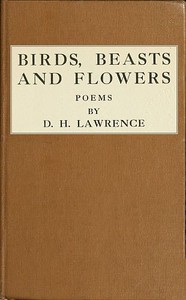
Birds, Beasts and Flowers by D. H. Lawrence
Forget everything you think you know about nature poetry. D.H. Lawrence's Birds, Beasts and Flowers throws the rulebook out the window. Published in 1923, this collection isn't about painting peaceful landscapes. It's a raw, physical, and often startling encounter with the natural world, where every creature and plant has a fierce, independent life of its own.
The Story
There's no single plot, but there is a relentless quest. Lawrence travels through the Mediterranean and the American Southwest, and instead of just seeing scenery, he confronts it. He doesn't admire a fig tree—he grapples with its secretive, inward-growing fruit. He doesn't watch a bat fly; he feels its alien, twitchy panic. In poems like "Snake," a simple encounter at a water trough becomes a profound drama about instinct, fear, and regret. The "story" is the journey of a man trying to break down the wall between himself and everything that is not human, often failing, but always being changed by the attempt.
Why You Should Read It
I love this book because it makes the familiar world feel strange and new. Lawrence's language is muscular and direct. You can feel the sticky heat of the Mediterranean sun in "Figs" and the dry, ancient dust on the "Bibbles" (a dog). He gives voices to the voiceless in the most surprising ways. Reading "Medlars and Sorb-Apples," you suddenly understand fruit decay as something darkly sensual, not just rot. This isn't comfortable poetry. It's provocative. It challenges the idea that humans are the pinnacle of creation, suggesting instead that we might learn something from the unthinking purity of a beast or the silent resolve of a flower.
Final Verdict
Perfect for readers who think poetry is too stuffy, and for anyone who needs a jolt of raw, elemental writing. If you enjoyed the visceral nature descriptions in authors like Annie Dillard or the philosophical animal encounters in Helen Macdonald's H is for Hawk, you'll find a kindred, fiercer spirit here. It's also a great pick for creative writers looking to see how to charge description with intense emotion and conflict. Be warned: Lawrence is opinionated, uncompromising, and will make you see the peach on your kitchen counter in a totally new, slightly unsettling light.
No rights are reserved for this publication. Access is open to everyone around the world.
Jackson Flores
1 year agoAfter finishing this book, it creates a vivid world that you simply do not want to leave. Absolutely essential reading.
Karen Thompson
5 months agoI started reading out of curiosity and it manages to explain difficult concepts in plain English. Truly inspiring.
Liam White
7 months agoI stumbled upon this title and it manages to explain difficult concepts in plain English. Highly recommended.
Liam Lee
4 months agoWow.
Robert Martin
1 year agoFast paced, good book.